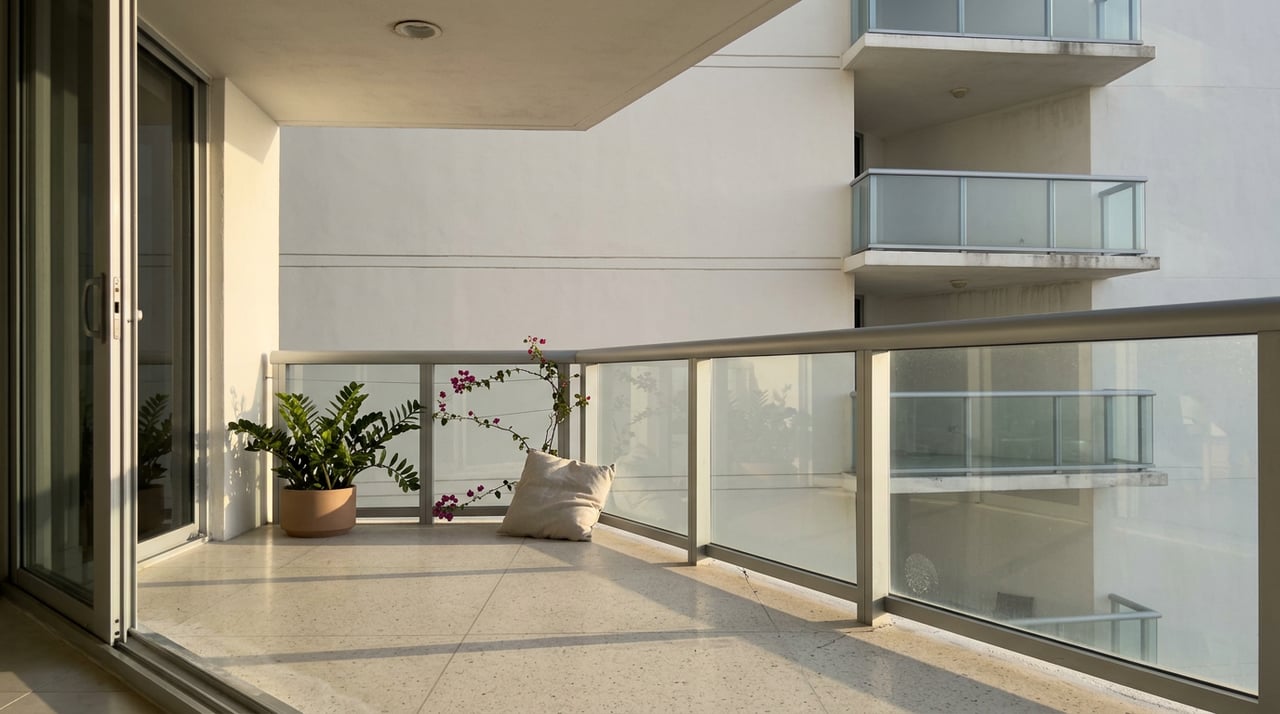
Picture two condos in Park Shore, both roughly 2,200 square feet, both facing the Gulf, both listed within a few hundred thousand dollars of each other. One sits in a tower built in 1976. The other is in a building finished in 2006. Most buyers walk into that comparison already knowing which one they trust more with their money. The newer building feels like the safer bet, fewer surprises, less concrete to worry about, a shorter list of things that could go wrong.
That instinct is the wrong question to be asking in Park Shore this year, and the reason has nothing to do with taste or finishes. It has to do with a legal deadline that quietly reshaped the risk profile of every high-rise along Gulf Shore Boulevard, and it did not sort buildings by age. It sorted them by whether their board got ahead of a bill that came due on January 1, 2026.
What actually changed on January 1
Florida's Structural Integrity Reserve Study requirement grew out of the 2021 Champlain Towers South collapse in Surfside. The law, first passed as SB 4-D in 2022 and refined by SB 154 in 2023, requires condominium and cooperative buildings three stories or taller to complete a SIRS covering eight structural components: roof, load-bearing systems, fire protection, plumbing, electrical, waterproofing and exterior painting, windows and doors, and any other item over a state-set dollar threshold that affects those systems. For 2026, that threshold sits at roughly $25,675, adjusted annually for inflation.
The part that changed the math for buyers is the funding rule. Associations that adopted a budget on or after December 31, 2024 lost the ability to vote to waive or reduce reserves for those eight items. Every owner-controlled association that existed on or before July 1, 2022 had to complete its first SIRS by December 31, 2025, and as of January 1, 2026, funding has to track that study's schedule. There is no more voting your way out of it. The Florida Department of Business and Professional Regulation lays out the mechanics directly: boards that paused reserves to finish milestone repairs must complete a SIRS before resuming contributions, and that SIRS now dictates the number.
The practical result, according to a Florida-focused legal guide tracking the rollout, is a wave of special assessments that have run anywhere from roughly $10,000 to well over $100,000 per unit, layered on top of a hardening insurance market that is already non-renewing buildings with underfunded reserves. Some of those assessments have nothing to do with visible damage. They come from insurance premium spikes hitting boards that never built a cushion.
A 34-year build window, and why the decade alone tells you less than you think
Park Shore's beachfront stretch holds roughly 25 high-rises built across a genuine range of eras, not a uniform post-2000 stock. The earliest towers date to the Lutgert family's original development push in the 1970s and 1980s, when Colony Gardens opened as a 29-unit mid-rise, Horizon House followed as a 15-story, 76-unit building, and Venetian Villas was completed in 1976 as a Mediterranean-style project built directly over the water. Surfsedge and La Mer both trace to the same decade. Monaco Beach Club arrived in 1983 as an 18-story, 138-unit tower, and Park Shore Tower followed in 1985 with 75 units across 20 stories.
The 1990s brought a second wave: Vistas in 1990, Baypointe at Naples Cay in 1996, and Le Ciel Venetian Tower and Le Rivage in the mid-1990s. Provence opened in 2000 with 85 units across 24 stories, The Regent followed in the early 2000s, and Aria closed out the run in 2006.
That spread matters because Florida's milestone inspection clock runs on building age, not on how the market perceives a building's quality. Coastal buildings within three miles of the shoreline hit their first milestone inspection at 25 years old, then every 10 years after. A tower from 1985 has already been through at least one cycle, possibly two. A tower like Provence, completed in 2000, crossed the 25-year mark in 2025, which means its first milestone inspection is either freshly completed or actively underway right now. Neither fact tells you whether the association actually funded what the engineers found. That is a separate question, and it is the one that decides your carrying costs.
Why an older building isn't automatically the riskier one
Surfsedge is the clearest example of why age is a weak proxy here. Built in the 1970s, the 15-story, roughly 100-unit building remains one of the more sought-after addresses on the beach walk, and not despite its age. Buyers who have gone through its condo documents consistently point to a board that stayed ahead of its structural obligations rather than deferring them. A building in its fifties with a fully funded reserve is a fundamentally different asset than a 25-year-old building that just discovered a funding gap large enough to trigger a special assessment.
This cuts the other way too. A tower from the early 2000s that has never faced a milestone inspection has also never been forced to prove its reserve math against an engineer's findings. Newer construction buys you fewer years of chloride exposure working on the rebar, a corrosion risk that structural engineers performing these studies routinely flag as a factor along the Gulf Coast. It does not buy you a verified funding history, because there may not be one yet to verify.
The number the listing price never shows you
Every Park Shore condo comparison eventually comes down to one figure: the percent funded shown in the building's SIRS. A study that exists but shows the reserve at 40 percent funded is a warning sign dressed up as compliance. A study showing 100 percent funding across all eight components is the actual assurance a buyer is looking for, and it is the number that predicts whether you will see a special assessment notice in your first two years of ownership or not.
Before writing an offer on any Park Shore high-rise unit, ask the seller's agent for four documents:
- The current Structural Integrity Reserve Study, including the percent-funded figure for each of the eight components
- The most recent milestone inspection report, or confirmation of when the next one is due
- The reserve funding schedule the board adopted for the current budget year
- Any special assessment history for the past five years, whether paid off or still being collected
Under DBPR rules, associations are required to provide SIRS and inspection records as part of the official record available to prospective purchasers, and buildings with 25 or more units now have to post governing documents, budgets, and reserve studies online under 2024's HB 1021. If a listing agent cannot produce these on request, that hesitation is itself information.
Why the current market gives buyers room to actually do this
Public listing trackers put Park Shore's median asking price near $1.99 million as of March 2026, with roughly 296 active listings, average time on market around 85 days, and a sale-to-list ratio near 93 percent. That is a slower, more patient cycle than the bidding-war years of 2021 and 2022, and it means buyers are not under the same pressure to waive document review just to win a contract. A building's structural paperwork is worth the extra week it takes to request and read, especially when the county-wide median closed price reported by the Naples Area Board of Realtors for April 2026 sat far below Park Shore's own high-rise segment, a reminder that beachfront pricing here does not move in lockstep with the broader Collier County market.
There is one more layer specific to this stretch of coastline. Some waterfront Park Shore properties, particularly those on the bay side rather than directly Gulf-front, fall inside the Moorings Bay Special Taxing District, created to fund water quality work, navigability, and maintenance dredging around the Moorings Bay system. It is a separate line item from condo reserves entirely, and worth confirming if the unit you are considering sits on a canal rather than the sand.
FAQ
Does a recent renovation reset a building's SIRS or milestone clock? No. Cosmetic renovations do not reset the statutory inspection schedule, which is tied to the building's age and certificate of occupancy date, not to interior or common-area updates.
If a building already completed its SIRS, does that mean no future assessments? Not necessarily. A completed SIRS only means the study exists. What protects you is full funding against that study's findings. A completed but underfunded SIRS can still lead to an assessment once the board catches up its budget to match the schedule.
Does any of this apply to single-family homes in Park Shore? No. SIRS and milestone inspection requirements apply to condominium and cooperative buildings three stories or taller under Chapter 718 of the Florida Statutes. Single-family homes and low-rise villas fall outside these specific mandates, though any HOA still carries its own reserve obligations for shared elements.
Can I request the SIRS before making an offer, or only after under contract? You can and should ask for it before writing an offer. Sellers and listing agents are generally willing to share these documents early, since Florida law requires them to be made available to prospective purchasers as part of the association's official records.
Park Shore rewards buyers who read past the view. The building's decade tells you when its next inspection is likely due. The SIRS tells you whether that inspection is going to cost you money you did not budget for. If you are comparing towers along Gulf Shore Boulevard and want help pulling the actual reserve documents before you fall in love with a floor plan, Abby Fraga can walk the numbers with you building by building. Let's Connect.